
Questions people ask before the first lesson
Grouped for parents, adult beginners and everyone else. If your question is not here, message Muhammad directly.
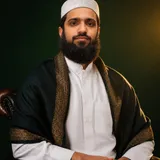 By Muhammad Areeb · Reviewed
What should I know before booking online Quran classes?
Every lesson at Tarteel ul Quran is live and 1-on-1 with Muhammad Areeb, on Zoom. Lessons are 30-minute, two, three or five times a week, for children from age 4 and adults. The first lesson is free and needs no payment, and plans start at $39/month.
- Teacher
- Muhammad Areeb, every lesson
- Who for
- Children from 4 and adults
- Lessons
- 30-minute, 2, 3 or 5 a week
- Languages
- English, Urdu and Arabic
- First lesson
- Free: No card or payment needed
- Price
- From $39/month
Questions parents ask about their child’s lessons
Still unsure? Send us a message. Replies 7 days a week.
Who teaches the lessons?
Every lesson is taught by Muhammad Areeb, the founder of Tarteel ul Quran. He also teaches Islamic studies at university level. You will not be passed between different tutors.
Are the classes one-on-one?
Yes. Every lesson is live and one-on-one: one teacher and one learner. Siblings each have their own lessons, usually back to back, so every child gets full attention.
What age can children start?
Many children start at 4. Younger learners need short lessons and a parent nearby. In the free lesson, Muhammad will tell you honestly whether your child is ready or would do better starting in a few months.
Can I sit in on my child’s lessons?
Yes, and you are encouraged to, especially in the first weeks. All messages about scheduling and progress go to parents, never directly to children.
How will I know my child is making progress?
You get short progress notes after lessons: what was covered, what to practise and what comes next. You can message Muhammad with questions at any time.
My child struggles to concentrate. Will online lessons work?
Usually, yes. Lessons are short and split into small activities, your child builds a relationship with one teacher, and a parent nearby helps a lot at the start. If online learning is not working for your child, you will be told honestly.
Do you have a female teacher?
Not at the moment. Every lesson is taught by Muhammad Areeb. Many families have girls and women learn with a family member nearby. If a female teacher is essential for you, mention it in the form and we will tell you honestly whether we can help.
What will a progress note tell me?
Three things: what was covered in the lesson, what to practise before the next one, and what comes next. Notes are short so you can read them in under a minute and act on them.
Can I ask how my child is doing between progress notes?
Yes. Message Muhammad at any time with questions. For children, all messages about scheduling and progress go to the parent, never directly to the child.
What should my child have ready for each lesson?
A laptop or tablet at eye level, headphones that fit, their Qaida or Mushaf, a pencil and a glass of water, in a quiet spot within earshot of a parent. Turning off notifications helps them focus.
How do I know if my child is ready for Hifz?
A child is usually ready when they read from the Mushaf steadily, apply the basic Tajweed rules and can keep a short daily routine. Hifz begins with a reading and Tajweed check, so the teacher confirms readiness before memorization starts.
Do you contact children directly?
No. When a child is learning, all messages about scheduling and progress go to the parent, never directly to the child. Parents are welcome to sit in on lessons.
Questions adults ask when starting from scratch
Still unsure? Send us a message. Replies 7 days a week.
I am an adult beginner and feel embarrassed. Is that normal?
Completely normal, and there is nothing to be embarrassed about. Lessons are private, so nobody else hears you, and you start from exactly where you are. The Prophet ﷺ said the person who recites with difficulty receives a double reward (Sahih Muslim 798).
Can I learn in the evenings or at weekends?
Yes. Evening and weekend lessons are available in most time zones. The lesson times on this site are converted to your local time automatically.
Should an adult who learned as a child start again from the beginning?
Not usually from the very beginning. Most adults who learned as children need a quick refresher of the Qaida stages they have forgotten, then reading practice from the Mushaf. The reading check in the free lesson shows how much to revisit.
I am a new Muslim. Where should I begin?
Begin with al-Fatihah and the words of salah alongside the Arabic letters, so your prayers improve from the first weeks. Many new Muslims also take a few Islamic studies lessons on wudu, salah and belief. Lessons are private and every question is welcome.
Will I be judged for not knowing the basics?
No. Lessons are one-on-one, so nobody else is listening, and there is no question too basic. Many adults and new Muslims start from the letters and the words of prayer.
Lessons, scheduling and payment
Still unsure? Send us a message. Replies 7 days a week.
How do online Quran classes work?
You meet your teacher on Zoom for a live 30-minute lesson. The Qaida or Mushaf is shared on screen, your teacher listens as you read and corrects each sound as it happens, and you finish with a short note on what to practise.
Is the trial lesson really free?
Yes. The first 30-minute lesson is free and you do not need a card or any payment details to book it. You only pay if you decide to continue.
Which countries do you teach in?
Any country with a stable internet connection. Times are arranged in your own time zone, whether you are in the UK, the US, Canada, Europe, Australia or the Gulf.
What do I need for online lessons?
A laptop or tablet with a camera and microphone, a stable internet connection and Zoom. Headphones help, especially for children. A phone works, but a bigger screen makes reading easier.
What happens if we miss a lesson?
Let Muhammad know as early as you can and the lesson can usually be moved to another time in the same week. Lessons missed without notice may not be made up.
How many lessons a week should we take?
Three lessons a week suits most learners: enough to build momentum, with time to practise in between. Two a week works for busy schedules, and five suits Hifz or faster progress.
How much do the lessons cost?
Plans start at $39 a month for two lessons a week. $55 covers three lessons a week and $85 covers five. Prices are per learner and the first lesson is free.
Are prices per family or per learner?
Per learner. Each learner has their own one-on-one lessons and their own plan.
How do I pay?
If you decide to continue after the free lesson, payment details are shared with you directly. Plans are billed monthly.
Can I pause or cancel?
Yes. You can change your plan, pause or stop before your next billing date. There is no long-term contract.
What happens in the free lesson?
A short reading check to find your level, a real mini-lesson so you can feel the teaching style, honest feedback and a recommended plan. There is time for your questions too.
How quickly will I hear back after booking?
Within 24 hours, usually on WhatsApp, to agree a time in your time zone.
Which languages are lessons taught in?
Lessons are taught in English, Urdu and Arabic. You choose the language you are most comfortable with when you book, and you can mention it in the form. The Quran itself is always read in Arabic; the teaching language is only for explanations, corrections and questions.
- Arabic terms such as fatha, sukoon or ghunnah are explained in your chosen language the first time they come up.
- Children who are more comfortable in one language at home and another at school can switch when it helps.
- Every term used in lessons is also defined in plain English in the Quran course glossary.
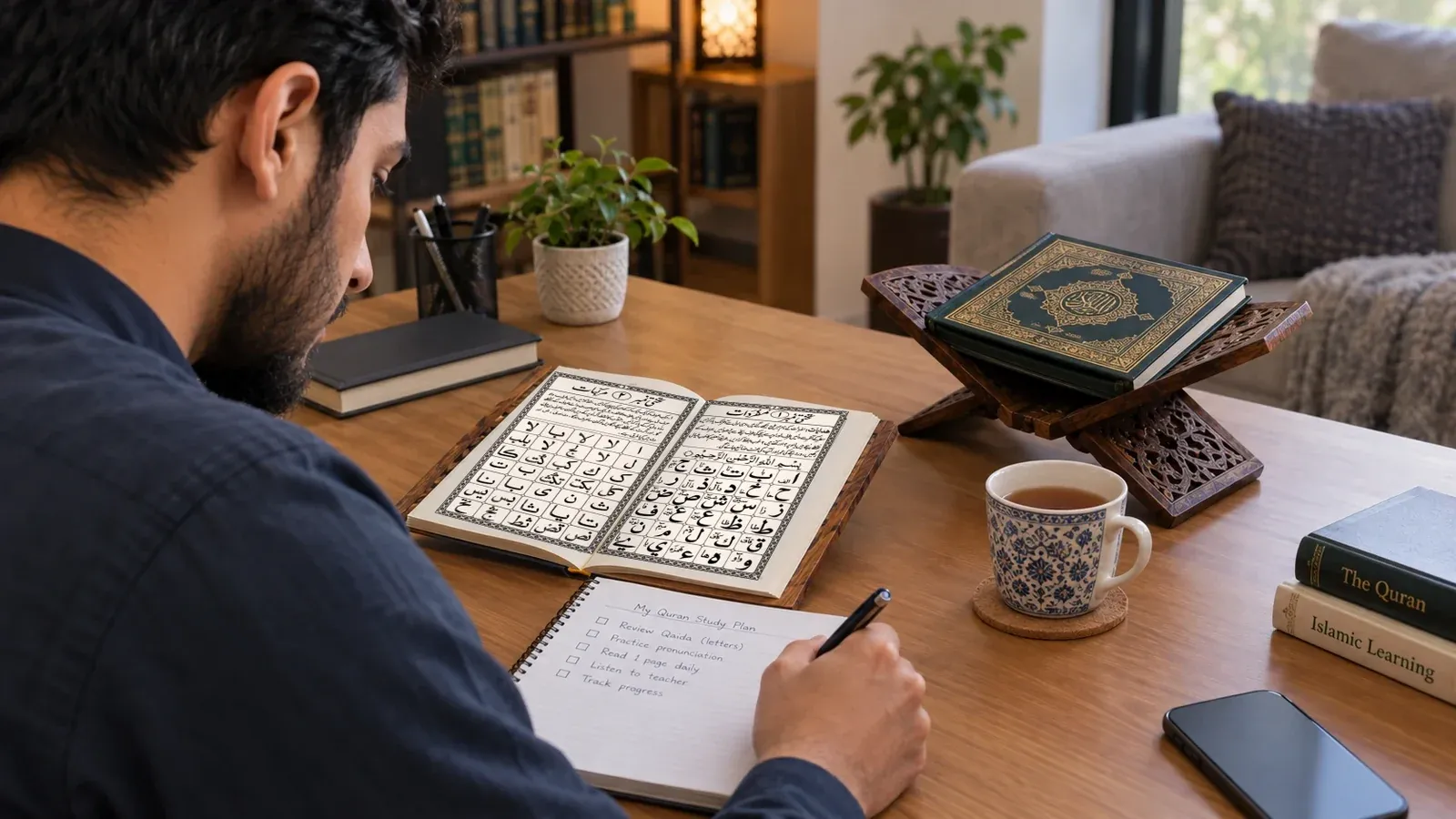
Free 30-minute first lesson. No card or payment needed. Monthly plans, no long-term contract.