
Welcome. Start the Quran at your own pace.
Private one-on-one lessons for new Muslims, with a patient teacher and no question too basic. Begin with the words you say in prayer and build from there.
Where should a new Muslim start with the Quran?
Start with the surahs and words of salah, beginning with al-Fatihah, alongside the Arabic letters in the Noorani Qaida. Your prayers improve from the first weeks while you build the reading skills for the whole Quran. Many new Muslims also take a few Islamic studies lessons on wudu, salah and belief.
- First weeks
- Al-Fatihah and the words of salah
- Alongside
- Arabic letters (Noorani Qaida)
- If helpful
- Wudu, salah and belief basics
- Format
- Private, 30-minute lessons
- First lesson
- Free, 30-minute
Everything you need, in the order you need it
Lessons are planned around you: what you already know, what you want to learn first and how much time you have.
- The words of salah. Al-Fatihah and the short surahs and phrases of prayer, recited correctly and understood.
- Reading the Arabic letters. The Noorani Qaida step by step, so you can read the Quran itself, not transliteration.
- The essentials of Islam. Wudu and salah step by step, the pillars of iman and Islam, and everyday duas.
- Meaning as you go. What you recite, explained in plain language, with a path to Quranic Arabic later.
A pathway that starts with your prayer
Most new Muslims follow roughly this order. Your teacher adjusts it to you.
- Prayer first Often the first few weeks
Al-Fatihah and the words of salah, with meaning, so your prayer feels steady. - The letters Alongside, at your pace
The 28 letters, their sounds and the vowel marks, through the Noorani Qaida. - Reading the Mushaf Once the Qaida feels steady
Short surahs from Juz ʿAmma, read directly from the Mushaf. - Understanding When you are ready
Quranic Arabic or translation and tafsir, to understand what you recite.
Learning privately, with patience
Many new Muslims worry about asking questions they think they should already know the answer to, or about reading aloud in front of others. Private one-on-one lessons remove both worries: nobody else is in the lesson, and every question is welcome.
The Prophet ﷺ said that the one who recites the Quran with difficulty receives a double reward (Sahih Muslim 798). Struggling with the letters at the start is not a sign you are behind. It is part of the reward.
- Go at your own pace; there is no class to keep up with.
- Ask anything, about the Quran, prayer or daily practice.
- Lessons in English, Urdu and Arabic, with Arabic terms explained the first time they come up.
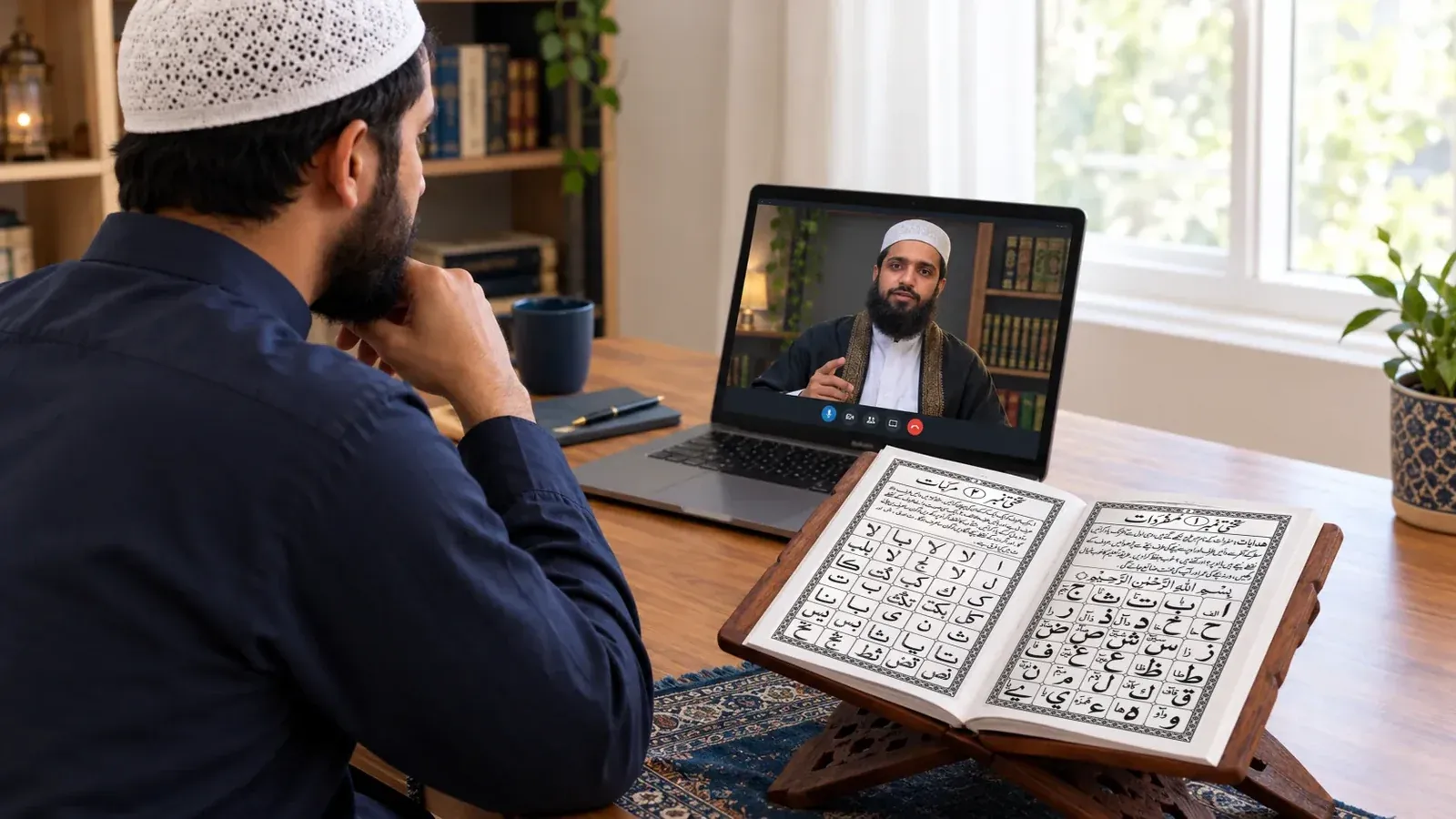
Adults starting from the letters may also like our guide to learning the Quran as an adult and the glossary of lesson terms.
Your teacher
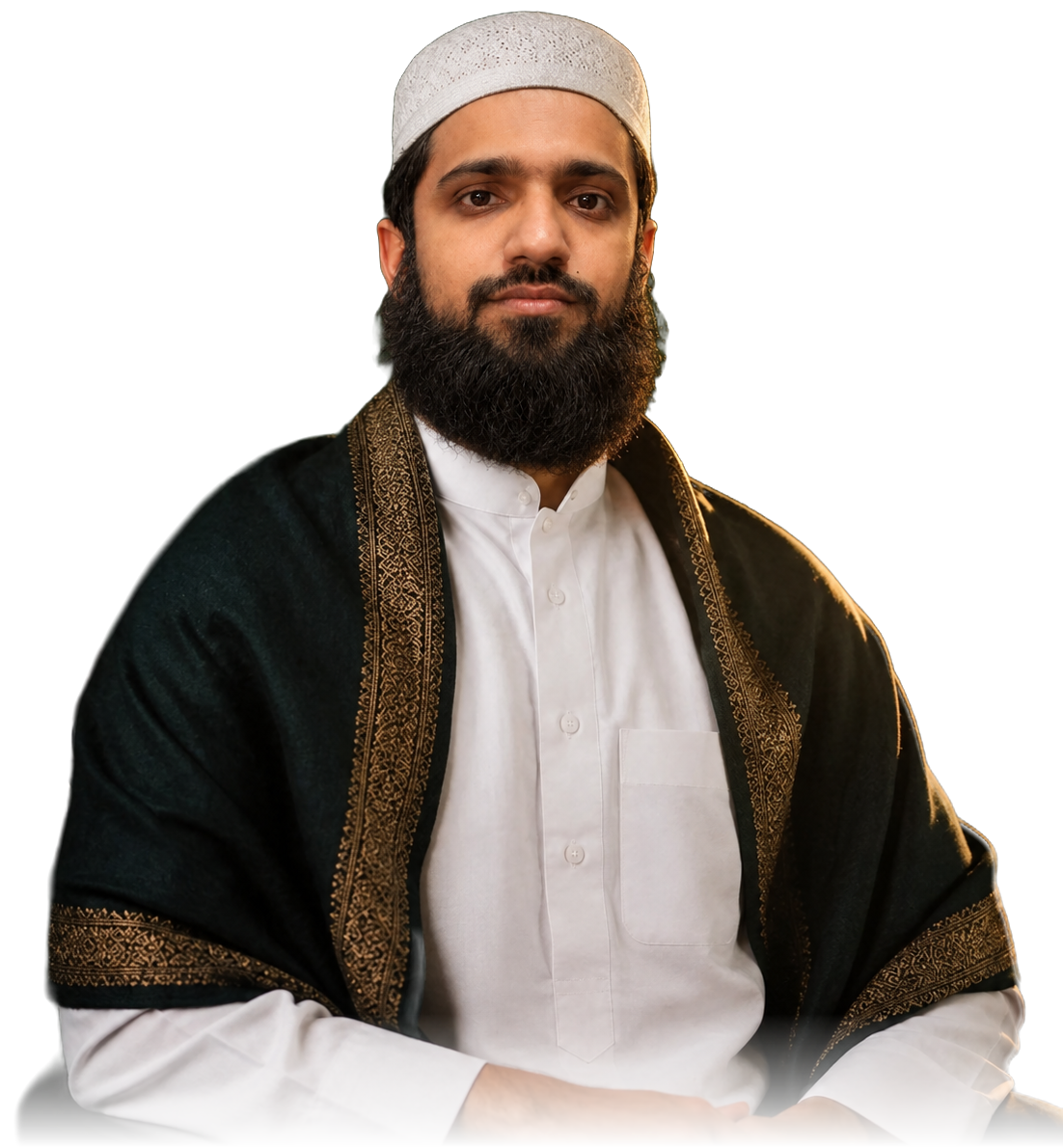
- Hafiz of the whole Quran since 2013, grade Mumtaz
- Ijazah in the ten Qira'at, by Ash-Shatibiyyah and Ad-Durrah
- Takhassus fil Qira'at at Jamia Darul Uloom Karachi, first position
- Alamiyyah degree, recognised by HEC as an MA in Arabic and Islamic Studies
- MS/M.Phil coursework in Usool ud Deen, University of Karachi, CGPA 3.83
Muhammad AreebFounder and Quran teacher
I teach every lesson at Tarteel ul Quran myself. That is the whole idea: you learn with one teacher who knows your name, your level and the letter you found difficult last week.
Alongside my academy students, I teach Islamic studies at university level. Since 2023 I have taught 300+ students, from four-year-olds meeting the Arabic alphabet for the first time to adults finally reading the Quran they grew up hearing.
My lessons are calm, structured and honest. I correct mistakes the moment they happen, I explain why a rule exists, and I tell parents exactly what their child practised and what comes next.
“Correct one letter properly and the next hundred become easier. I would rather go slowly and get it right than rush and build habits we have to undo later.”
Muhammad Areeb
- Noorani Qaida and Quran reading
- Tajweed
- Hifz (memorization)
- Quranic Arabic
- Islamic studies
Questions new Muslims often ask
Still unsure? Send us a message. Replies 7 days a week.
Who teaches the lessons?
Every lesson is taught by Muhammad Areeb, the founder of Tarteel ul Quran. He also teaches Islamic studies at university level. You will not be passed between different tutors.
I am an adult beginner and feel embarrassed. Is that normal?
Completely normal, and there is nothing to be embarrassed about. Lessons are private, so nobody else hears you, and you start from exactly where you are. The Prophet ﷺ said the person who recites with difficulty receives a double reward (Sahih Muslim 798).
Do you have a female teacher?
Not at the moment. Every lesson is taught by Muhammad Areeb. Many families have girls and women learn with a family member nearby. If a female teacher is essential for you, mention it in the form and we will tell you honestly whether we can help.
Can I learn in the evenings or at weekends?
Yes. Evening and weekend lessons are available in most time zones. The lesson times on this site are converted to your local time automatically.
Should an adult who learned as a child start again from the beginning?
Not usually from the very beginning. Most adults who learned as children need a quick refresher of the Qaida stages they have forgotten, then reading practice from the Mushaf. The reading check in the free lesson shows how much to revisit.
I am a new Muslim. Where should I begin?
Begin with al-Fatihah and the words of salah alongside the Arabic letters, so your prayers improve from the first weeks. Many new Muslims also take a few Islamic studies lessons on wudu, salah and belief. Lessons are private and every question is welcome.
Your first lesson is free. Start whenever you are ready.
In a free 30-minute lesson, Muhammad checks your level honestly and gives you a clear plan, whether or not you join.
- Free 30-minute first lesson
- No card or payment needed
- Monthly plans, no long-term contract